




Key Takeaways
🆓 A reputable free VPN can be enough for occasional browsing, public Wi-Fi, or basic privacy needs.
💳 Paid VPNs usually offer faster speeds, more servers, fewer data restrictions, and more advanced features.
🔐 “Free” does not automatically mean unsafe. What matters more is how the VPN provider makes money and handles your data.
📺 If you stream or game frequently, travel often, or use a VPN every day, a paid VPN is usually worth considering.
Free VPN vs Paid VPN: Quick Comparison
At a basic level, free and paid VPNs do the same job: they route your internet traffic through a VPN server, encrypt the connection, and replace your visible IP address with the server's IP.
The difference is usually in how much infrastructure, bandwidth, flexibility, and support you get.
| Feature | Free VPN | Paid VPN |
|---|---|---|
| Price | Free | Monthly or annual subscription |
| Encryption | Usually available from reputable providers | Standard |
| Privacy | Varies significantly by provider | Usually more transparent with reputable providers |
| Data | Often limited | Usually unlimited |
| Speed | May be slower or congested | Usually faster and more consistent |
| Server locations | Limited | Much wider selection |
| Streaming | May be limited or inconsistent | Generally better suited |
| Gaming | May suffer from congestion or latency | More server options and stability |
| Advanced features | Often limited | Usually more features |
| Devices | May be restricted | Usually supports multiple devices |
| Customer support | Limited | Usually better |
| Best for | Occasional or basic use | Frequent or demanding use |
These are typical differences rather than absolute rules. A reputable free VPN can still be safer and more reliable than a poorly operated paid service. Price alone does not tell you whether a VPN is trustworthy.
Why Are Some VPNs Free While Others Cost Money?
Running a VPN service costs money. Providers need to maintain servers, pay for bandwidth, develop apps, fix security issues, and support users. If millions of people connect every day, those operating costs can be substantial.
That means a free VPN still needs some way to fund the service. The important question is not simply, “Why does this VPN cost nothing?” It is how the provider pays for the service when you are not paying directly.
How Do Free VPNs Make Money?
One of the most common models is freemium. A provider offers a limited free version and charges users who want more servers, higher speeds, more features, or fewer restrictions. Paid subscribers effectively help support the free tier.
Some free VPNs rely on advertising. Users may see ads inside the app or while interacting with the service. Other providers may rely on tracking, advertising partnerships, or other data-related business models. This does not mean that every free VPN sells user data, but it does mean you should pay close attention to the provider's privacy policy and business model.
A free VPN may also be part of a larger company that earns money from other products or services.
Free VPN vs Paid VPN: 6 Differences That Actually Matter
Price is the most obvious difference, but the way a VPN performs in daily use matters much more. These six areas usually show the clearest gap between free and paid services.
1. Privacy and Security
A reputable free VPN can still encrypt your traffic, change your visible IP address, and provide basic leak protection. The real issue is that free VPN quality varies widely, so you need to check who owns the service, what it logs, what permissions the app requests, and whether the provider has undergone independent audits.
Paid VPNs usually have more resources for features such as kill switches, modern protocols, leak protection, obfuscation, and other security tools. However, paying does not automatically make a VPN private or trustworthy. Provider transparency, ownership, logging practices, and audit history still matter more than price alone.
2. Speed and Connection Reliability
Free VPNs often operate with fewer servers, less bandwidth, or more users sharing the same infrastructure. That can lead to slower speeds, congestion, unstable connections, or intentional speed limits, especially during busy periods.
Paid services generally have more capacity to invest in servers and bandwidth, so performance is often more consistent. This matters most for streaming, video calls, downloads, and gaming. Reliability is just as important as raw speed: a stable connection can feel much better than a VPN that reaches a high speed briefly but frequently slows down or disconnects.
3. Data and Bandwidth Limits
Many free VPNs impose a monthly or daily data allowance, while others offer unlimited data but reduce speed or restrict certain activities. For light browsing, email, or short public Wi-Fi sessions, these limits may not matter much.
They become much more noticeable with HD streaming, video calls, downloads, or all-day VPN use. Paid VPNs usually remove or greatly increase these restrictions, making them better suited to people who transfer more data or keep the VPN connected for long periods.
4. Servers and Locations
Free VPN plans usually offer fewer countries and servers, and some automatically assign a location rather than letting you choose. That may be fine if you only need a nearby server, but it becomes restrictive if you need an IP address from a specific country.
Paid plans typically provide more countries, cities, and server options. A wider network also helps distribute users across more infrastructure, which can reduce congestion and improve latency. More servers matter because they give you more flexibility, not simply because a bigger number looks better.
5. Streaming, Gaming and Everyday Use
For casual browsing, a free VPN may work perfectly well. The difference becomes clearer with more demanding activities.
| Use Case | Free VPN | Paid VPN |
|---|---|---|
| Basic browsing | ✅ Often enough | ✅ |
| Public Wi-Fi | ✅ A reputable free VPN may be enough | ✅ |
| Occasional IP change | ✅ | ✅ |
| HD/4K streaming | ⚠️ Data and speed limits may interfere | ✅ Better suited |
| Gaming | ⚠️ Congestion and limited servers may increase latency | ✅ More server options |
| Torrenting | ⚠️ May be restricted or unsupported | ✅ More commonly supported |
| Travel | ⚠️ Limited country selection | ✅ Wider location access |
| Everyday VPN use | ⚠️ Limits become more noticeable | ✅ Better suited |
If you stream or game frequently, travel often, or use a VPN every day, paid VPNs are generally more practical because speed, data, and server restrictions are much less likely to get in the way.
6. Features, Devices and Support
Free VPN plans usually focus on basic connection features, while paid services may add tools such as a kill switch, split tunneling, obfuscation, multi-hop routing, dedicated IP options, and support for more simultaneous devices.
Paid users are also more likely to get direct customer support instead of relying only on help-center articles. These extras are useful if you use a VPN regularly or across several devices, but they are not essential for everyone. If you only want occasional encrypted browsing, basic VPN functionality may already be enough.
Are Free VPNs Safe?
Free providers have to make money somehow, and if it's not on premium plans or usage limits, after which you have to pay, you should assume they're making their money off of your data, logging your activity, and using it for marketing purposes.

Some free VPNs are safe, while others may create more privacy risks than they solve. The word “free” alone is not enough to tell you whether a VPN is trustworthy.
A better approach is to evaluate the provider itself.
Clear company ownership
A detailed privacy policy
Clearly explained logging practices
Modern VPN protocols
Independent security or privacy audits
Reasonable app permissions
A transparent business model
No clear information about the developer or company
A vague or missing privacy policy
Excessive permissions unrelated to VPN functionality
Unclear logging practices
Claims such as “100% anonymous”
Unlimited speed, servers, and data with no obvious business model
When Is a Free VPN Actually Enough?
A free VPN can be enough if your needs are simple and occasional. The key is whether its limits actually interfere with what you want to do.
- Occasional public Wi-Fi: Useful when you only need a VPN at airports, cafés, hotels, or other unfamiliar networks.
- Basic browsing and email: A good fit if you mainly read websites, check email, and do not need high bandwidth.
- Temporary IP changes: Practical when you only need another IP address for a short period.
- Low data use: Fine if monthly or daily limits are enough for your normal activity.
- Trying a VPN for the first time: A free plan lets you see whether you actually use a VPN enough to justify paying.
If these limits do not bother you, there may be little reason to upgrade.
When Is Paying for a VPN Worth It?
A paid VPN is most useful when free-plan limits start affecting your regular use. Instead of looking at every premium feature individually, focus on whether you need more performance, flexibility, or consistency.
A paid VPN is worth considering if you:
- Stream or game frequently: Faster, less congested servers are more practical for demanding activities.
- Travel often: More countries and cities give you much better location choice.
- Use a VPN every day: Data caps and speed restrictions become much more frustrating with regular use.
- Need specific server locations: Paid plans usually offer a much wider network.
- Use several devices: Premium plans often support more simultaneous connections.
- Want advanced features: Tools like split tunneling, obfuscation, or multi-hop may only be available on paid plans.
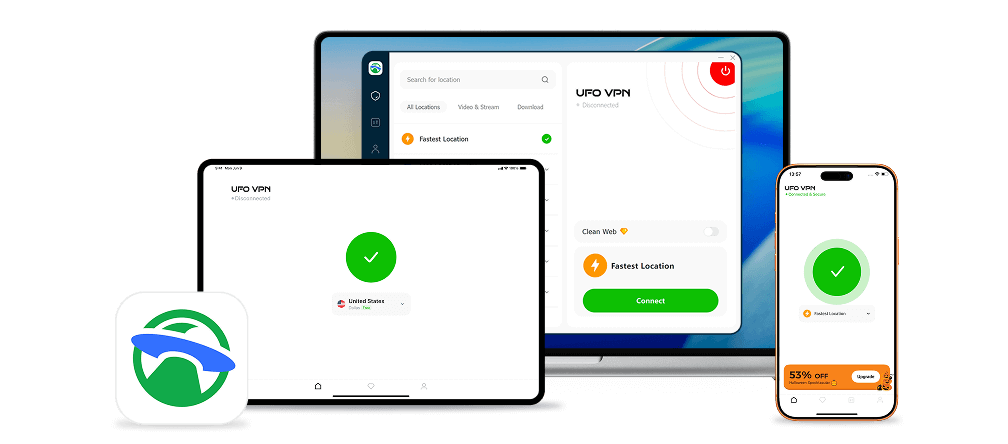
In short, if a VPN is part of your daily internet routine rather than an occasional tool, paying usually makes more sense. If you are not sure which category you fall into, you can start with UFO VPN for basic VPN use and see how it fits into your routine. If you later need more server options, faster connections, or broader everyday use, you can move to its premium option.
Conclusion: Which One Should You Choose?
A free VPN can be a sensible choice for light, occasional use, while a paid VPN is usually more practical for frequent streaming, gaming, travel, or everyday protection. The important part is not simply whether the service costs money, but whether its speed, server access, privacy practices, and limits match how you actually use a VPN.
Start with your real needs, then choose the option that meets them with the fewest unnecessary compromises.
FAQs
Is a Free VPN Better Than No VPN?
A reputable free VPN can still encrypt traffic between your device and the VPN server and replace your visible IP address. That can provide useful privacy protection, especially on unfamiliar networks. However, using an untrustworthy VPN may introduce its own privacy risks, so the provider matters more than whether the service is free.
Do Free VPNs Sell Your Data?
Not all free VPNs sell user data. Some use a freemium model in which paid subscriptions support the free tier, while others rely on advertising or partnerships. However, some providers may collect more user information than others. Always check the VPN's privacy policy, logging practices, and business model before using it.
Do Free VPNs Work With Netflix?
Some free VPNs may work with Netflix or other streaming platforms, but the experience can be inconsistent. Limited server locations, data caps, slower speeds, and VPN detection can all affect streaming. If you stream regularly, a paid VPN is generally more practical.
Can a Paid VPN Still Track You?
Yes. Paying for a VPN does not automatically guarantee a no-logs service. A paid provider can still collect connection or account information depending on its policies. Check its privacy policy, ownership, audit history, and logging practices rather than assuming the subscription price guarantees privacy.
Should I Use a Free VPN on Public Wi-Fi?
A reputable free VPN can be useful on public Wi-Fi because it encrypts traffic traveling between your device and the VPN server. However, a VPN does not protect you from phishing websites, malware, weak passwords, or other threats outside the VPN connection itself.
Why Do Paid VPNs Usually Have More Servers?
Subscription revenue gives VPN companies more money to spend on infrastructure, bandwidth, maintenance, and expansion. More servers can reduce congestion, improve location choice, and make it easier for users to connect to a nearby or specific-country server.